Trimming a Cat's Nails: Where the Quick Sits, and Why Cats Fight It
A cat's claw retracts, and that changes both the technique and the risk. Where the quick sits, how to see it, and the hold that keeps a claw extended.
By Marin Okafor, editor, dog gear and nutrition labels
Published Sep 3, 2026 · 10 min read
- Grooming
In this guide
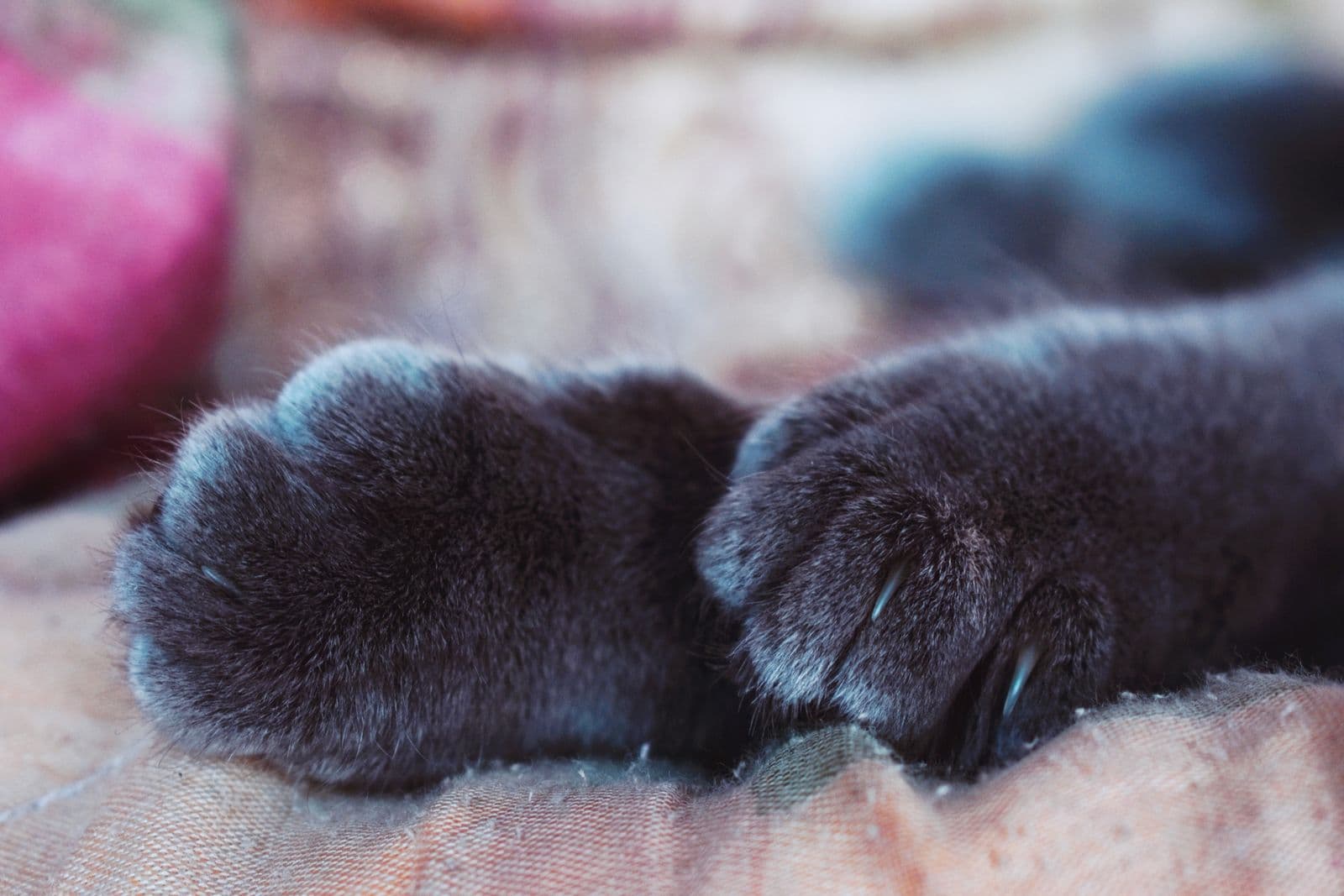
A dog's nail is fixed in a permanent position, worn down a little on every walk. A cat's claw is not. It sits inside a sheath and retracts under a tendon by default, which is why a relaxed cat's paw looks clawless even though the claws are fully intact underneath. That single anatomical difference is the reason cat nail trimming is a different skill from dog nail trimming, not a smaller version of it: the claw has to be actively extended before it can be cut at all, and the fur around a retracted claw hides exactly the landmark you need to see.
Indoor cats need the help a scratching post and outdoor surfaces would otherwise provide. A cat that scratches trees and concrete sheds the outer husk of each claw naturally. A cat that scratches a carpeted post does some of that but not all of it, and claws that are not worn down keep growing until they curl, catch in fabric, or in an old or arthritic cat start to grow into the paw pad itself. Regular trimming is not cosmetic maintenance. It is what stands in for the wear an outdoor cat gets for free.
Extending the claw, which is the whole first step
You cannot trim a retracted claw. The technique starts with getting it out, and the mechanism is a gentle press rather than a pull.
Hold the paw from above, with a thumb on the top of the toe and a finger underneath, and press gently to spread the toe. The claw extends on its own as the toe pad flattens. You are not pulling it out, you are removing the fold that was holding it in. The Cornell Feline Health Center describes the same motion, gently squeezing the paw to extend the nail into the position where it can be trimmed.
Do one toe at a time and let go the instant the cut is done. Holding the paw open longer than necessary is what turns a tolerant cat into a paw-shy one.
Finding the quick
Inside the claw is a core of living tissue carrying blood vessels and nerve endings. Cornell's material describes it as "pink, triangular tissue embedded within the base of the nail." Cut into it and the claw bleeds and hurts, the same failure mode as a dog's quick, but the geometry is different enough to matter.
Most cat claws are more translucent than dog nails, including in cats with dark coats. Hold the extended claw up to a light source and the quick is usually visible as a pink wedge running from the base out toward the tip, narrowing as it goes. The cut point is in front of that wedge, through the clear curved section commonly called the hook, which has no blood supply at all.
If a particular cat's claws are dense enough that the quick will not show, treat them the way a black dog nail is treated. Take a thin slice at a time and stop the moment you see a change in the cut surface, rather than committing to one confident cut. A claw that has gone a long time between trims can also have a quick that has grown out further than expected, in which case the same rule applies as an overgrown dog nail: small amounts, repeated over several sessions, rather than one attempt to reach the final length immediately.
The cut itself
Standard cat nail scissors or a guillotine-style clipper both work. Which clipper suits which cat and which pair of hands is a separate choice, with four picks. A human clipper's flat blade tends to crush rather than shear a cat's narrower, more curved claw, and crushing is what causes splitting.
Position the blade perpendicular to the claw, not angled, and cut through the clear hook in a single motion once you can see where the quick ends. Removing the curved tip is the whole job. There is no reason to trim toward blunt, and a claw cut too short at the base is a claw cut into the quick.
Dewclaws, on the front paws only, sit higher up the leg and do not touch the ground, so they never get the wear that the weight-bearing claws get from scratching. Check them every session. They are the claw most likely to be forgotten and the one most likely to curl into the pad if it is.
Why cats fight this more than dogs typically do
A cat's paw carries a disproportionate share of its tactile sense, which is part of why paw-touching triggers a stronger reflex to withdraw than most other handling does. The 2022 AAFP/ISFM Cat Friendly Veterinary Interaction Guidelines address this directly, recommending cooperative care over restraint: rather than pinning a cat to force a nail trim through, the cat is conditioned in short sessions to accept and eventually offer the paw voluntarily. One specific technique from the guidelines is snipping dried spaghetti near the cat to mimic the sound of clippers, days before any actual clipping happens, so the noise itself stops being the trigger.
The practical version of that at home: touch and gently press the paws often, outside of trimming sessions, with no clipper in sight and a treat immediately after. Do one or two claws at a time rather than all eighteen in one sitting for a cat that struggles, and stop before the cat has decided to fight rather than after. A trim spread across three short sessions on a calm cat beats one long session on a cat that is escalating, because the second pattern is what teaches a cat to disappear at the sight of the clipper.
A towel wrap, the "burrito" hold, with the paw being worked on left free, controls a squirming cat without pinning it down entirely, and it is worth having a second person for a cat that will not settle for one.
Scratching, and why it is not competing with trimming
Cats need to scratch. It conditions the claws, marks territory with scent glands in the paw, and stretches the back and shoulders in a way little else does, and the ASPCA is explicit that declawing "should never be used as a behavioral remedy or as a preventative measure" for a cat that scratches furniture. Trimming and an appropriate scratching post solve the same underlying problem, overlong and uncontrolled claws, from two directions, and neither one replaces the other.
The post itself has to match the cat's preference, not the owner's assumption. Cornell's material sorts it into two patterns: cats that dig at carpet want a carpet-covered post, cats drawn to a nubby, textured surface like upholstery want one wrapped in sisal or rope, and cats that scratch horizontally, clawing at a rug rather than a vertical surface, do better with a cat tree oriented around a flattened cardboard scratcher or a log-style post laid on its side rather than another vertical column. A post the cat ignores gets no wear at all, and an unworn claw is a claw that needs a trim sooner, not later.
Temporary vinyl nail caps are a reasonable middle step for a cat that will not tolerate trimming yet or a household managing scratching damage in the short term. They last roughly four to six weeks before falling off with normal claw growth and need reapplication on the same cycle, not a one-time fix.
Building a cat that tolerates it
The same habit that prevents matting in a long-haired cat applies here: frequent, short, low-stakes handling normalizes the touch before it is paired with a tool. A kitten introduced to paw handling early rarely becomes a cat that fights a trim as an adult, but an adult cat with no history of it can still be brought around with the desensitization approach the AAFP/ISFM guidelines describe. It is slower, not impossible.
Pair sessions with something the cat wants, keep them short enough to end on a calm note, and treat a fight as a signal to stop and shorten the next session rather than to push through. The right brush for shedding season works the same way: tool matters less than the pattern of short, frequent, low-conflict handling that keeps a cat comfortable being touched at all.
Questions people actually ask
How often does a cat need its nails trimmed?
Most indoor cats need a trim every two to three weeks, because a claw that isn't worn down by outdoor surfaces keeps growing until it curls or catches. An outdoor or heavily scratching cat may go longer between trims. The signal to check is a claw catching in fabric or bedding, or an audible click on hard flooring.
Why won't my cat's claws come out to be trimmed?
Cat claws retract by default under a tendon and only extend when the toe is gently pressed from top and bottom. Pulling at the fur or the visible claw tip without extending the toe first will not work and can hurt. Press to spread the toe pad and the claw extends on its own.
Can I use human nail clippers on a cat?
A flat human clipper blade tends to crush a cat's narrow, curved claw rather than shear it cleanly, which causes splitting. Cat-specific scissors or a guillotine-style pet clipper cut perpendicular to the claw and are built for the shape.
Is declawing a solution if trimming isn't working?
No. Declawing amputates the last bone of each toe rather than removing the nail, and veterinary and welfare organizations including Cornell and the ASPCA position it as an absolute last resort after trimming, nail caps, posts and behavioral approaches have failed, not an alternative to them.
What are nail caps and how long do they last?
Vinyl caps glue over a trimmed claw and blunt it for scratching. They typically last four to six weeks before falling off with normal claw growth and need reapplication on that cycle rather than once.
Sources
As an Amazon Associate we earn from qualifying purchases. We earn a commission on some links, at no extra cost to you. It never changes which products we recommend or the order they appear in. Full disclosure

Who wrote this
Marin Okafor
Editor, dog gear and nutrition labels
Marin Okafor edits PetGearSearch and writes the dog side of it: food, beds, crates, carriers, grooming tools, and the pet insurance policies that pay for the rest. The ingredient panel and the AAFCO statement get read before a single review does, because that back-of-bag paragraph is where two apparently identical foods stop being identical.
The standard
How this guide was built
- The full product specification, ingredient panel or material spec, read end to end rather than summarised from a retail listing.
- The veterinary and regulatory guidance that applies to the category, cited by name and linked — AAFCO nutrient profiles, WSAVA manufacturer guidelines, the VOHC accepted-product list.
- Aggregated owner reviews at volume across retailers, read for the pattern rather than the anecdote, with deliberate attention to the one-star reports where the failure modes live.
- Every price checked against the live listing on the date printed beside it.