Can Cats Eat Tuna? Mercury, Thiamine and the Treat-Sized Answer
Tuna is fine as an occasional treat and wrong as a diet. The mercury figures by tuna type, the vitamin E and thiamine problems, and how much counts as a treat.
By Tess Lindqvist, writer, cat products and everyday health
Published Oct 7, 2026 · 12 min read
- Cat Food
In this guide
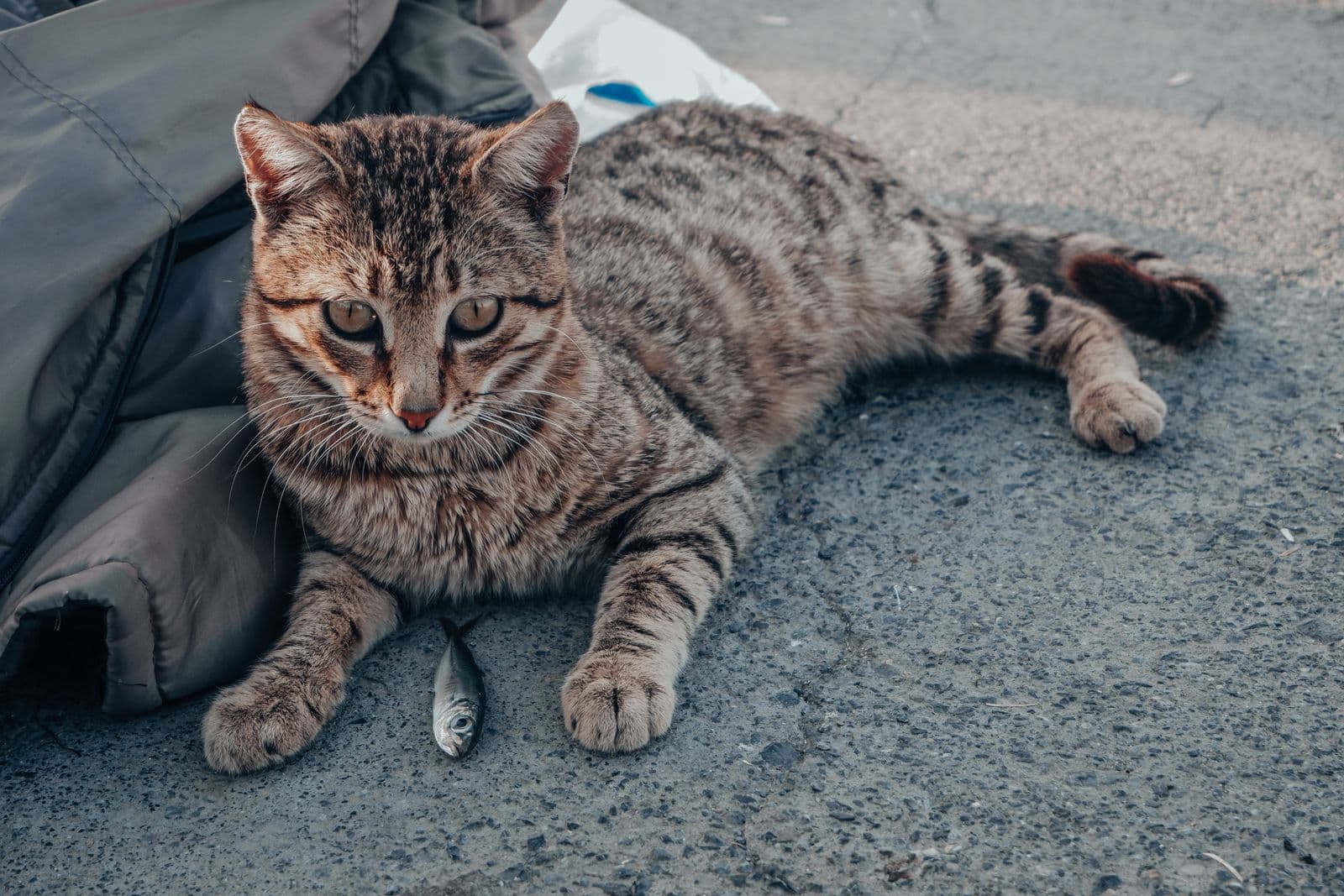
Yes, a cat can eat tuna. A spoonful of plain canned tuna now and then is not going to hurt a healthy adult cat, and plenty of cats will beg for it. The trouble starts when the spoonful becomes a habit, or the habit becomes the diet, and the problems are specific enough to be worth knowing by name.
There are four of them. Human tuna is not a complete food for a cat. Tuna carries more mercury than most fish, and some tuna carries a lot more than others. A heavy tuna diet has a documented history of causing vitamin E deficiency in cats. And raw fish, though not canned tuna, can strip thiamine out of a diet. None of these is a reason to panic about a treat. All of them are reasons tuna stays a treat.
A can of tuna is not cat food
The can in a kitchen cupboard was made for people, and it carries no promise to meet a cat's needs. Cat food that does make that promise says so in a nutritional adequacy statement, which AAFCO defines as the line stating the product "is formulated to meet the nutritional levels established by the AAFCO Dog (or cat) Food Nutrient Profiles" for a named life stage. Human tuna has no such line, because nobody checked it against those profiles.
That matters more for a cat than for most animals. The Merck Veterinary Manual lists the dietary requirements that set cats apart: cats "require dietary sources of vitamin A, arachidonic acid, and taurine," need vitamin A already formed rather than made from plant carotenes, and "cannot synthesize substantial amounts of niacin from tryptophan." A single food, however much the cat loves it, is not built to cover that list. The full set of feline-specific nutrients, and how a label proves they are present, is laid out in reading the protein line on a cat food label.
Mercury: which tuna, and how much more
Mercury levels differ widely between fish, and between kinds of tuna. The FDA publishes mean mercury concentrations for commercial seafood, and the differences between tuna types are large.
| Product | Mean mercury (ppm) | Samples |
|---|---|---|
| Tuna, fresh or frozen, bigeye | 0.689 | 21 |
| Tuna, fresh or frozen, all species | 0.386 | 420 |
| Tuna, canned, albacore | 0.350 | 451 |
| Tuna, canned, light | 0.126 | 545 |
| Pollock | 0.031 | 95 |
| Salmon, canned | 0.014 | 19 |
| Sardine | 0.013 | 90 |
Canned albacore averages 0.350 ppm against 0.126 ppm for canned light tuna, almost three times as much. Canned salmon and sardines sit around a tenth of the light tuna figure.
The reason that gap matters more for a cat than for a person is body size. Cailin Heinze, a veterinary nutritionist at Tufts University's Cummings School of Veterinary Medicine, put it plainly in a Tufts answer to exactly this question: "when a cat eats tuna as its main diet, it ingests far more mercury on a body-weight basis than a human does." Her advice was to limit tuna "to occasional treats of canned chunk-light tuna," not albacore, which she described as coming from a larger species of tuna. She also advised against tuna-based cat foods on a daily basis, suggesting foods made from lower-mercury fish such as salmon instead.
Commercial cat food is not exempt from the pattern. A University of Nevada, Reno team led by Sarrah Dunham-Cheatham tested 125 pet foods, including 17 dry and 35 wet cat foods, and published the results in Science of the Total Environment in 2021. Only two samples exceeded the maximum tolerable mercury levels recommended by the National Research Council, which is the reassuring part. The less reassuring part is that tuna was listed as the first ingredient in both, and six of the ten highest-mercury products were cat foods. The researchers also reported that every sample they examined had some labelling inaccuracy.
The practical reading is narrow. A tuna-flavoured food in a rotation is not the concern. A cat eating tuna-first food at every meal, or living on human tuna, is getting the most mercury the pet food aisle can supply.
Vitamin E and yellow fat disease
Tuna is rich in unsaturated fats, and unsaturated fats use up vitamin E as the body protects them from oxidising. Feed enough of them without enough vitamin E and the fat tissue itself becomes inflamed.
This is not a theoretical risk. Merck states that "naturally occurring deficiencies of vitamin E have occurred in cats given large quantities of canned tuna, resulting in the development of pansteatitis (yellow fat disease)." Clinician's Brief describes the cause as "consumption of high levels of unsaturated fatty acids found in certain types of food (ie, tuna and other oily fish)" together with inadequate vitamin E, and lists the signs as fever as high as 105°F, lethargy, loss of appetite and "extreme pain when touched anywhere along its trunk."
Formulated cat food has this built into its rules. AAFCO's cat food nutrient profiles set a vitamin E minimum of 40 IU per kilogram of dry matter, and a footnote instructs formulators to "add 10 IU Vitamin E above the minimum concentration for each gram of fish oil per kilogram of diet." A cat eating mostly human tuna has nobody making that adjustment. If omega-3 fatty acids are the reason tuna appeals, a measured fish oil, agreed with the vet, is the controlled way to add them, and the arithmetic in the fish oil dose guide applies to cats as well.
Thiamine: raw fish is the problem, not the can
Thiamine, vitamin B1, is a nutrient cats need in quantity. A 2017 review in Veterinary Sciences by Kritikos, Parr and Verbrugghe notes that cats require approximately two to four times more thiamine per day than dogs, and that AAFCO's minimum for cat food is 5.6 mg per kilogram of dry matter.
Raw fish threatens that supply directly. Merck explains that "thiaminases are found in raw freshwater fish and clams" and "can produce a deficiency by rapid destruction of dietary thiamine." The same passage carries the good news for tuna lovers: "Thiaminases are destroyed by cooking fish," and the heat of canning "is sufficient to destroy thiaminase." Canned tuna is cooked. A home diet built on raw fish is the version that carries this risk, and raw feeding brings separate problems of its own, covered in raw cat food and bird flu.
Thiamine also turns up in the news for a reason that has nothing to do with tuna. Kritikos and colleagues count six recalls of commercial cat foods for suspected or confirmed thiamine deficiency in North America since 2010. A Tufts study by Markovich, Freeman and Heinze measured thiamine in 90 canned cat foods, one fish and one non-fish flavour from each of 45 brands, and found 12 of them below the AAFCO minimum. Pate foods and foods from smaller companies ran lower. Fish versus non-fish flavour made no significant difference. A fish-flavoured can is not the thiamine risk. A food that left the factory short of the vitamin is, whatever its flavour.
Tuna cat food, tuna dinner, with tuna, tuna flavour
The word tuna on a can of cat food means very different amounts depending on how it is used, and AAFCO's naming rules set the thresholds.
| Name on the label | Rule | Minimum named ingredient |
|---|---|---|
| Tuna Cat Food | 95% rule | 95% of the product excluding added water, and 70% including it |
| Tuna Dinner, Entree or Platter | 25% rule | 25% excluding added water, and 10% including it |
| Cat Food with Tuna | with rule | 3% of the product |
| Tuna Flavor Cat Food | flavor rule | No minimum, a listed ingredient must supply the flavour |
None of those names says anything about whether the food is complete. That is still the adequacy statement's job. A can named Tuna Cat Food that carries a complete and balanced statement for adult maintenance is a meal. A can whose label reads "intended for intermittent or supplementary feeding only," which is the wording AAFCO requires on supplemental products, is a topper or a treat however meal-shaped the portion looks. Check tuna toppers and broths for that line before treating one as dinner.
For a cat that eats a tuna-heavy commercial food every day, the label to look for is the one that combines a complete and balanced statement with a fish lower down the food chain. Heinze's suggestion of salmon fits the FDA table above.
How much tuna counts as a treat
Tufts' Petfoodology service, written by veterinary nutritionist Deborah Linder, gives the rule that applies to every treat: a pet "should only receive 10% of their daily calories from treats so you don't unbalance their diet." For a 10 lb cat with an average requirement of 300 calories a day, Linder's figure, that is a maximum of 30 calories of treats, and the budget covers every treat the cat gets, tuna included. Heinze applies the same 10 percent ceiling to tuna specifically.
Thirty calories is not much tuna. A cat's real daily requirement depends on its weight, age and activity, and working out the actual figure is covered in how much to feed a cat. Whatever the number, a few points keep the treat a treat.
- Choose canned light, packed in water. Light tuna carries about a third of albacore's mercury, and oil adds calories the treat budget has to absorb.
- Plain and drained. Tuna salad, seasoned tuna and anything mixed with other ingredients belongs to the household, not the cat.
- Not every day. Heinze's word was occasional, and a daily topper is not occasional.
- Cooked, never raw. Canning has already dealt with thiaminase. Raw fish has not.
The cat that will only eat tuna
Some cats, offered tuna often enough, start refusing everything else. This is a feeding problem rather than a character flaw, and it is fixable.
Move the cat back onto a complete and balanced food gradually, mixing the new food into the old over a week or more. The schedule in switching a cat's food without GI upset works here too, with tuna playing the part of the old food and shrinking a little each day. A complete fish-based canned food is a reasonable bridge, because it smells familiar while doing the job tuna cannot.
Never let a cat go hungry to win the argument. A cat that refuses the new food outright should go back to something it will eat, and a cat that has stopped eating altogether needs a vet, not a stand-off. If a cat is on a prescription diet for any condition, any change to what it eats, tuna treats included, is a conversation for the vet who prescribed it.
Questions people actually ask
Can cats eat canned tuna?
As an occasional treat, yes. Plain canned light tuna packed in water, drained, kept within the roughly 10 percent of daily calories that Tufts allows for all treats. It is not a complete diet and should not be fed daily.
Is albacore or light tuna better for cats?
Light tuna. The FDA's mean mercury figure for canned albacore is 0.350 ppm against 0.126 ppm for canned light tuna, nearly three times as much, which is why Tufts' Cailin Heinze recommends chunk-light rather than albacore as a treat.
Can tuna cause thiamine deficiency in cats?
Raw fish can, because some raw fish contain thiaminase, an enzyme that destroys thiamine. Merck notes that cooking destroys thiaminase and that canning heat is sufficient, so canned tuna is not the thiamine risk. Thiamine shortfalls in commercial foods have come from formulation and manufacturing problems, not from fish flavours.
Is tuna-flavoured cat food bad for cats?
Not if it carries a complete and balanced statement and is part of a varied diet. A food named Tuna Flavor needs only enough tuna to supply the flavour. Tufts advises against tuna-based foods every day because of mercury, and suggests lower-mercury fish such as salmon for daily feeding.
What is yellow fat disease in cats?
Pansteatitis, an inflammation of body fat caused by a diet high in unsaturated fats and too low in vitamin E. Merck records it in cats fed large quantities of canned tuna. Signs include fever, lethargy, loss of appetite and pain when the body is touched, and it needs a vet.
Can kittens eat tuna?
The same treat rule applies, and a kitten's treat budget is small because the growth food is doing important work. A kitten should get its calories from a food carrying a complete and balanced statement for growth or all life stages, with tuna as a rare extra at most.
Sources
- FDA: Mercury Levels in Commercial Fish and Shellfish (1990-2012)
- Tufts Now: With concerns about mercury poisoning, is it safe to give canned tuna to cats as a treat? (Cailin Heinze)
- University of Nevada, Reno: Mercury levels in pet food cause for concern, fish-based foods main culprit (2021)
- Merck Veterinary Manual: Nutritional Requirements of Small Animals
- Merck Veterinary Manual: Nutritional Disorders of the Spinal Column and Cord in Animals
- Clinician's Brief: Pansteatitis (Yellow Fat Disease) in the Cat
- Kritikos G, Parr JM, Verbrugghe A. The Role of Thiamine and Effects of Deficiency in Dogs and Cats. Veterinary Sciences, 2017, 4(4), 59
- Markovich JE, Freeman LM, Heinze CR. Analysis of thiamine concentrations in commercial canned foods formulated for cats. JAVMA, 2014, 244(2), 175-179
- AAFCO: Reading Labels
- AAFCO Dog and Cat Food Nutrient Profiles (2014 revision)
- Tufts Petfoodology: Treat options for dogs and cats without unbalancing their diet (Deborah Linder)
As an Amazon Associate we earn from qualifying purchases. We earn a commission on some links, at no extra cost to you. It never changes which products we recommend or the order they appear in. Full disclosure

Who wrote this
Tess Lindqvist
Writer, cat products and everyday health
Tess Lindqvist writes the cat side of PetGearSearch, plus the health-adjacent categories where a label makes a claim the evidence has to back. The question asked of every product is the one owners actually ask at 3am: will the animal use it, and does it do the thing the box says.
The standard
How this guide was built
- The full product specification, ingredient panel or material spec, read end to end rather than summarised from a retail listing.
- The veterinary and regulatory guidance that applies to the category, cited by name and linked — AAFCO nutrient profiles, WSAVA manufacturer guidelines, the VOHC accepted-product list.
- Aggregated owner reviews at volume across retailers, read for the pattern rather than the anecdote, with deliberate attention to the one-star reports where the failure modes live.
- Every price checked against the live listing on the date printed beside it.