Fish Oil for Dogs and Cats: The Dose Arithmetic Nobody Prints
The useful number is combined EPA and DHA, and it scales to metabolic body weight. Most labels lead with total oil, which is the wrong figure.
By Tess Lindqvist, writer, cat products and everyday health
Published Jun 11, 2026 · 9 min read
- Supplements & Health
In this guide
Fish oil is one of the few supplements in the pet aisle with a real evidence base behind it, and one of the most consistently underdosed. Both facts have the same cause: the number printed largest on the bottle is not the number that matters, and the number that matters scales in a way nobody expects.
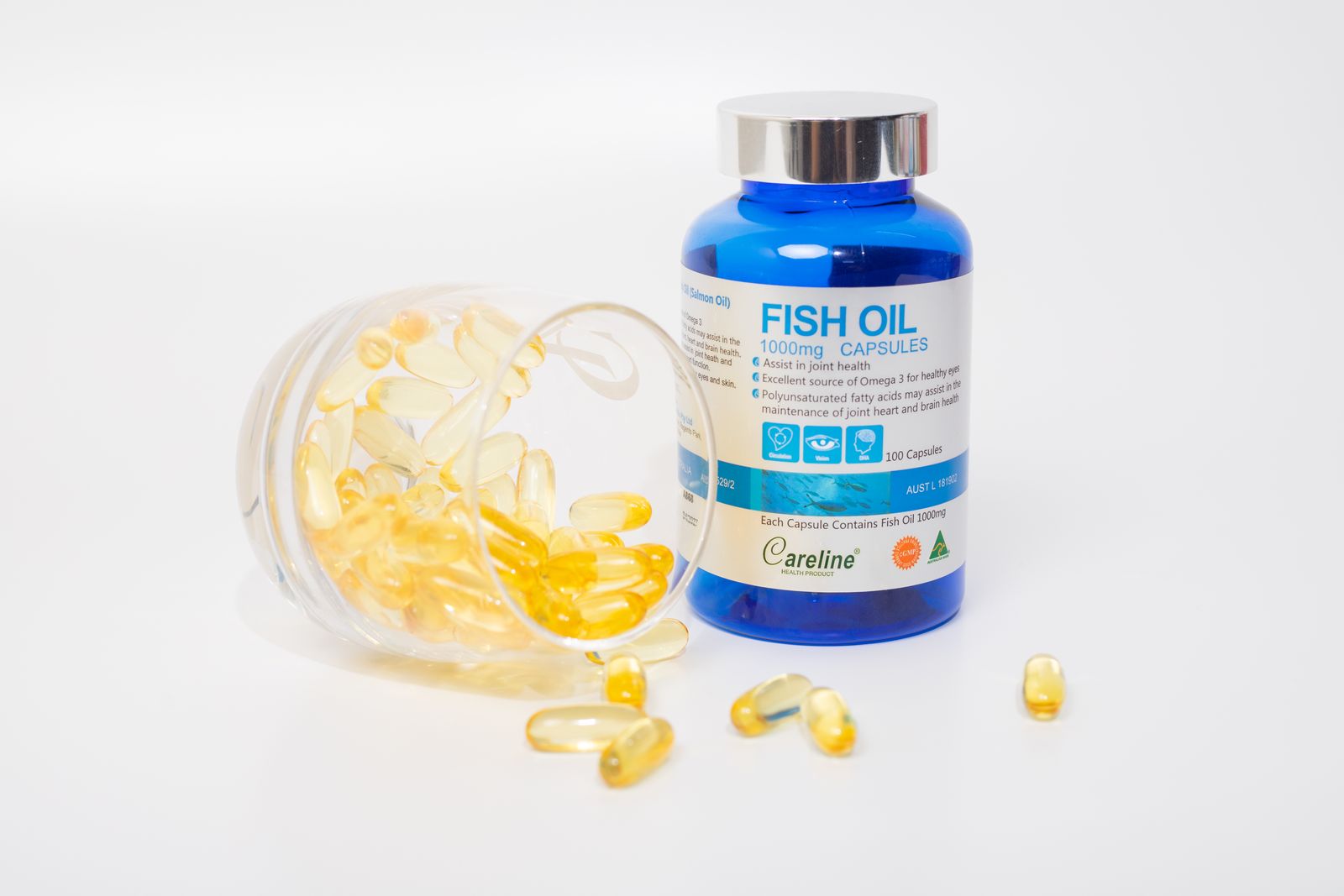
The useful figure is combined EPA and DHA. Most labels lead with total fish oil, or with total omega-3, which includes fatty acids that do not do the work. A 1,000mg fish oil capsule commonly contains something like 180mg EPA and 120mg DHA, so 300mg of the active pair. Buying by the big number gets you roughly a third of what you thought.
Why it scales to metabolic body weight
The dosing convention here uses body weight to the power of 0.75 rather than body weight itself. That exponent shows up throughout animal energetics, for the same reason it shows up in the arithmetic behind a feeding chart: metabolic rate does not scale linearly with mass. A 40kg dog does not need twice the dose of a 20kg dog.
The figures most commonly cited in veterinary practice are these. For dogs with osteoarthritis, the National Research Council's recommended combined EPA and DHA dose is 310 times body weight in kilograms to the power 0.75. The safe upper limit, which should not be exceeded, is 370 times the same term, equivalent to roughly 2,800mg per 1,000 kcal of diet. Across therapeutic uses more broadly, the doses reported in the literature span a wide range, from around 50mg per kilogram at the low end to over 200mg per kilogram for osteoarthritis.
Worked through for a 20kg dog: 20 to the power 0.75 is about 9.46. Multiply by 310 and the osteoarthritis target is roughly 2,930mg of combined EPA and DHA per day. The safe ceiling at 370 is about 3,500mg.
Now hold that against the bottle. At 300mg of EPA plus DHA per 1,000mg capsule, that dog needs about ten capsules a day. The label on most consumer joint chews suggests one or two, delivering a fraction of the figure the research used. This is the single reason most owners conclude fish oil did nothing.
Two caveats that matter more than the arithmetic. These are the doses used in osteoarthritis management, which is a clinical situation, and the correct move is to take the calculation to your vet rather than to act on it. And a general wellness dose for a healthy animal is far lower than a therapeutic one, so a small daily amount for coat condition is a different decision from a joint protocol.
Reading a label so the number is real
Find EPA and DHA separately and add them. If the panel gives only total omega-3, you cannot do the arithmetic, because total omega-3 includes ALA and other fatty acids that dogs and cats convert to EPA and DHA very inefficiently. A label that hides the split is telling you something.
Check the unit the declaration applies to. Per capsule, per two chews, per scoop, per pump, per serving for a weight band. A chew declaring 400mg of omega-3 per two chews is a 200mg chew, and if only a third of that is EPA and DHA the real figure is around 65mg.
Reject proprietary blends. A single combined total with no ingredient breakdown makes the product impossible to evaluate, and in a category where the dose is the whole question, that is disqualifying.
Prefer a product carrying the NASC seal. It is not evidence the ingredient works, but it is the closest thing available to an assurance the bottle contains what it says, in a category with no pre-market verification. What the seal does and does not cover is worth knowing precisely.
Watch the calories. Fish oil is fat, at roughly 9 kcal per gram. A meaningful therapeutic dose is a meaningful number of calories, and on a dog already carrying weight that is not a rounding error. Subtract it from meals.
Plant oils are not a substitute
Flaxseed, chia and hemp oil supply alpha-linolenic acid, which is an omega-3 but not the one doing the work. Conversion of ALA to EPA and then to DHA is inefficient in dogs and very poor in cats, whose limited desaturase activity is part of why they are obligate carnivores in the first place.
If the reason you are buying is joint support or an inflammatory condition, the product needs to supply EPA and DHA directly, which means marine sources: fish oil, krill oil, or an algal oil for a household that will not use fish. Algal oil is a legitimate direct source of DHA and is the sensible option where fish oil is off the table.
Storage, oxidation and the fish burp problem
Fish oil oxidises. An oxidised oil is not merely less effective, it delivers oxidation products you would rather the animal did not eat, and it is why rancid fish oil smells the way it does.
Keep it cold and dark. Refrigerate liquid oil after opening and use it within the window the manufacturer states, usually a couple of months. Buy a bottle size the animal will actually finish rather than the economical large one. Smell it periodically: fresh fish oil smells faintly of fish, and rancid fish oil smells sharply and unmistakably wrong. If it smells bad, discard it.
Capsules and pumps oxidise more slowly than an open bottle. Some products include vitamin E as an antioxidant, which is reasonable, though it is not a licence to leave the bottle on a sunny windowsill.
Where the evidence is stronger and weaker
Canine osteoarthritis is the best-supported use, and it is where the higher doses come from. Omega-3s appear in international consensus guidance on managing canine osteoarthritis as part of a multimodal plan, alongside weight management, exercise modification and analgesia. Two points about that framing are worth keeping: it is an adjunct rather than a treatment, and weight management is the intervention with the largest effect in that whole list. A dog carrying twenty percent excess body weight is putting that load through the joint every step, which is why feeding correctly outperforms any bottle. The joint supplements worth considering sit inside that plan rather than replacing it.
Skin and coat conditions have reasonable support, and it is the use most owners notice, because the effect is visible and the timescale is weeks rather than months.
Chronic kidney disease and some cardiac and inflammatory conditions have therapeutic rationale in the veterinary literature. Those are treatment decisions belonging entirely with a vet who knows the case.
Cognitive support, allergies and general wellness are the softer claims, where the evidence thins considerably. Not implausible, not established.
In every case the timescale is longer than people expect. Fatty acid incorporation into cell membranes takes weeks, and a judgement made after ten days is a judgement made too early. Six to twelve weeks is the reasonable window before deciding it did nothing.
What to do
Find the combined EPA and DHA per unit on the label and work out what your animal is actually getting per day. Compare that with what the research used. If the gap is a factor of five or ten, which it very often is, you have found out why the product seemed to do nothing.
Then take the arithmetic to your vet rather than acting on it, particularly for a dog with diagnosed osteoarthritis, because the safe upper limit is real and the rest of the pain plan matters more than this component of it. Buy a marine source rather than a plant one, buy a bottle size you will finish, keep it cold, and give it twelve weeks before you decide.
Questions people actually ask
How much fish oil should I give my dog?
Work in combined EPA and DHA rather than total oil. The commonly cited osteoarthritis figure is 310 times body weight in kg to the power 0.75, with a safe upper limit of 370 times the same term. For a 20kg dog that is roughly 2,900mg a day against a ceiling near 3,500mg. Take that number to your vet before acting on it.
Why is my dog's supplement dose so much lower than that?
Because most consumer chews are dosed for palatability and cost rather than to match the research. A chew supplying 100mg of combined EPA and DHA is a wellness dose, not a therapeutic one, and the label serving suggestion will not tell you that.
Is flaxseed oil as good as fish oil?
No. Flax supplies ALA, and conversion to EPA and DHA is inefficient in dogs and very poor in cats. If you need EPA and DHA, use a marine source. Algal oil is a good direct alternative where fish oil is not an option.
Can I give my pet human fish oil capsules?
Often yes for the oil itself, provided you do the arithmetic on EPA and DHA content and check the inactive ingredients. Never give a human product containing xylitol, which is severely toxic to dogs, and never substitute cod liver oil, which carries vitamins A and D at levels that accumulate.
How long before I see an effect?
Six to twelve weeks. Fatty acids have to be incorporated into cell membranes, and skin and coat changes show sooner than joint effects. Judging at two weeks is judging too early.
Sources
- Colorado State University Veterinary Health System: canine fish oil dosing chart
- Today's Veterinary Practice: fish oil dosing in pet diets and supplements
- COAST Development Group international consensus guidelines for the treatment of canine osteoarthritis
- JAVMA: therapeutic use of fish oils in companion animals
- Cornell Riney Canine Health Center: osteoarthritis
- Cornell Riney Canine Health Center: how joint supplements can help with orthopedic conditions
- NASC Quality Seal
As an Amazon Associate we earn from qualifying purchases. We earn a commission on some links, at no extra cost to you. It never changes which products we recommend or the order they appear in. Full disclosure

Who wrote this
Tess Lindqvist
Writer, cat products and everyday health
Tess Lindqvist writes the cat side of PetGearSearch, plus the health-adjacent categories where a label makes a claim the evidence has to back. The question asked of every product is the one owners actually ask at 3am: will the animal use it, and does it do the thing the box says.
The standard
How this guide was built
- The full product specification, ingredient panel or material spec, read end to end rather than summarised from a retail listing.
- The veterinary and regulatory guidance that applies to the category, cited by name and linked — AAFCO nutrient profiles, WSAVA manufacturer guidelines, the VOHC accepted-product list.
- Aggregated owner reviews at volume across retailers, read for the pattern rather than the anecdote, with deliberate attention to the one-star reports where the failure modes live.
- Every price checked against the live listing on the date printed beside it.