Wet vs Dry Cat Food: The Moisture Argument, Honestly
Cats evolved to get water from prey and drink badly to compensate. What that does and does not prove about which bowl to fill.
By Tess Lindqvist, writer, cat products and everyday health
Published Mar 21, 2026 · 10 min read
- Cat Food
In this guide
The wet versus dry argument is the loudest disagreement in cat feeding and one of the least carefully made. On one side, dry food is treated as a slow poison. On the other, moisture is dismissed as a marketing angle for a product that costs four times as much per calorie. The useful version sits between the two, and it starts with a fact about the animal rather than about the food.
The domestic cat descends from a desert-adapted small predator. Its natural prey, a mouse, is around seventy percent water, and a cat eating whole prey takes in most of its daily water with its meal. Cats accordingly evolved a weak thirst drive, which is not a defect until you put one in a house and feed it something that is ten percent water. A cat on dry food does drink more than a cat on wet food. What it does not reliably do is drink enough to fully close the gap, and total water intake generally comes out lower on a dry diet.
That is the moisture argument in its entirety. Everything else is inference from it, and the inferences vary a lot in quality.
Where the moisture argument is strong
Feline lower urinary tract disease. This is the strongest ground. FLUTD is a group of conditions affecting the bladder and urethra, and dilute urine passed frequently is protective across most of them. Increasing water intake is standard advice from the veterinary side for cats with a history of cystitis or crystals, and canned food is the simplest way to deliver it. In a male cat, a urethral obstruction is fatal within a day or two, so anything that lowers the odds is not a marginal benefit.
Constipation and chronic kidney disease. Both are common in older cats and both are helped by better hydration. A cat with reduced kidney function loses the ability to concentrate urine and needs more water intake to compensate, not less. That is a treatment decision belonging with your vet, but the direction of travel is not controversial.
Weight control, indirectly. Canned food is less calorie dense per gram and per mouthful, which makes portion control easier and makes free feeding much harder to do by accident. Dry food left down all day is the standard way a house cat becomes an overweight house cat.
Palatability in a sick or elderly cat. A cat that has stopped eating is an emergency in slow motion, because feline hepatic lipidosis develops fast in a cat that goes without food. Warm, strongly aromatic wet food is often the only thing a nauseated or anosmic cat will accept.
Where the argument is weaker than people claim
Dry food does not cause diabetes. The carbohydrate-causes-diabetes claim gets repeated as settled and is not. Obesity is the dominant modifiable risk factor for feline diabetes, and dry food's association with obesity runs mostly through free feeding and calorie density rather than through carbohydrate content itself. A cat fed measured portions of dry food at an appropriate calorie intake is in a very different position from a cat with a bowl topped up all day. Some diabetic cats do better on low-carbohydrate canned diets, which is a treatment question rather than a prevention one.
Dry food does not clean teeth. This one refuses to die. Standard kibble shatters on contact and does close to nothing for the gumline, where periodontal disease actually happens. There are specific dental diets with larger, fibre-aligned kibble designed to scrape rather than shatter, and some of those hold a place on the Veterinary Oral Health Council's accepted list. Ordinary dry food is not one of them, and the VOHC list is the only claim in that category worth reading.
Crude protein comparisons across formats are usually wrong. A canned food guaranteeing 10 percent protein and a kibble guaranteeing 34 percent are not four hundred percent apart. Convert both to dry matter before comparing anything. The canned food at 78 percent moisture has 22 percent dry matter, so 10 divided by 0.22 is about 45 percent protein on a dry basis, against 34 divided by 0.90, or roughly 38 percent for the kibble. Most of the "wet food is protein-poor" claim is a failure to run that division. Reading a cat food label properly starts there.
The comparison nobody publishes
Cost is the reason most households feed dry food, and the honest version of the comparison is per calorie rather than per can.
A typical adult cat needs somewhere in the region of 200 to 250 kcal a day. A 5.5oz can of a mainstream pate runs roughly 160 to 200 kcal, so a wet-fed cat gets through about one and a quarter cans a day. Dry food at 350 to 400 kcal per cup means the same cat eats about two thirds of a cup. At retail, the wet route commonly costs three to five times as much per day. Over fifteen years, with two cats, that is a large number, and pretending otherwise helps nobody.
Convenience matters too, and it is not a trivial objection. Wet food cannot be left out for more than a couple of hours without spoiling, which rules it out for a household away for ten hours a day unless a timed feeder is involved. Dry food suits puzzle feeders, timed dispensers and cats fed by a neighbour. Those are real constraints, not laziness.
What we recommend
Feed some wet food every day. That is the practical conclusion, and it holds for almost every household.
For most cats, a mixed feeding pattern captures the large majority of the benefit at a fraction of the cost of all-wet. One canned meal a day, with a measured portion of dry making up the rest of the calories, gets meaningful water into the cat, keeps the palate flexible, and stays affordable. Keeping a cat accustomed to both textures is worth doing on its own account, because a cat that has only ever eaten dry food is very hard to switch to a therapeutic canned diet at eleven years old when its kidneys make that necessary.
Go all wet where the situation calls for it: a cat with any urinary history, a cat with kidney disease, a chronically constipated cat, or an overweight cat where portion control has failed. In those cases the extra cost buys something specific.
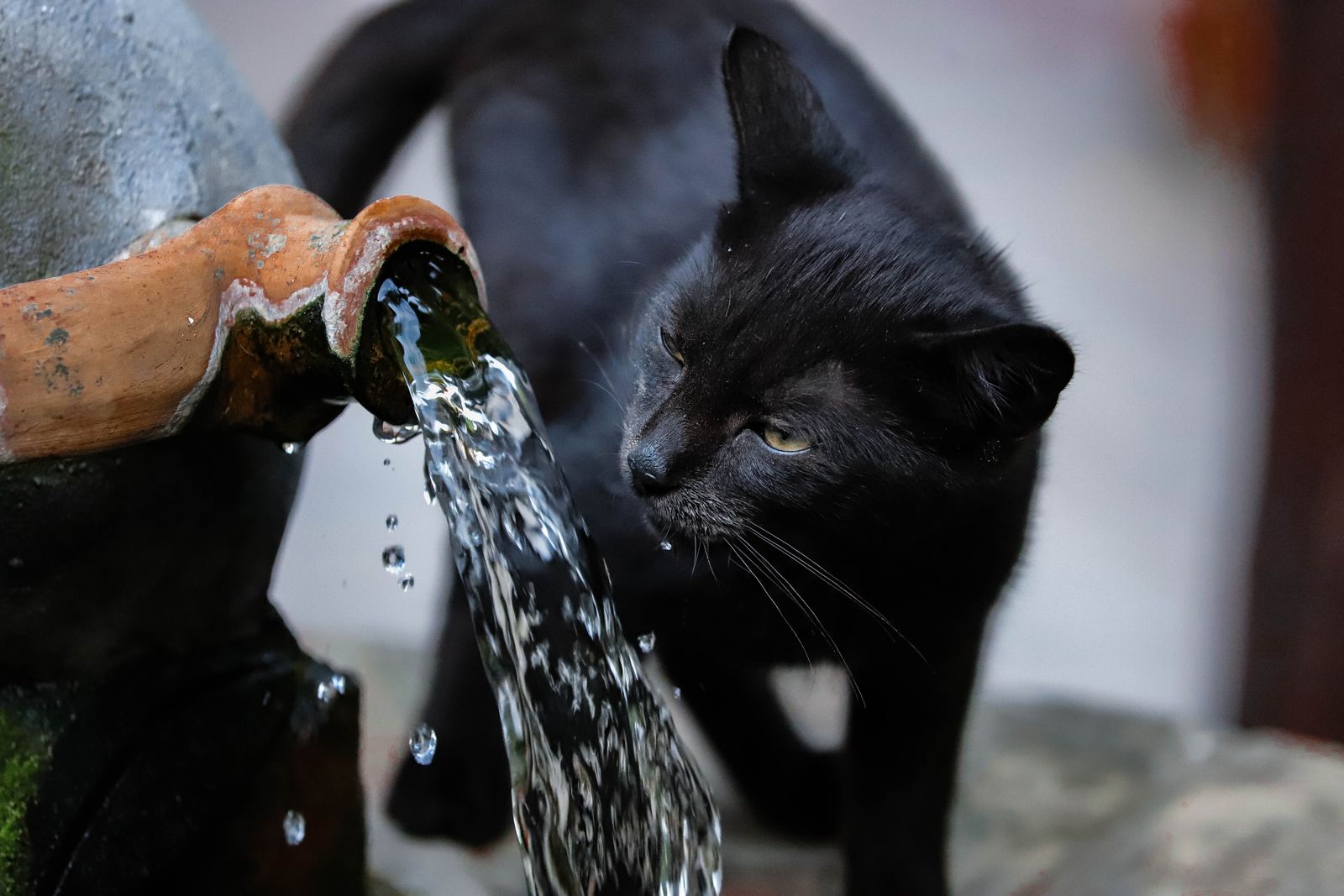
Whatever the split, measure it. Divide the daily calorie target between the two formats rather than serving a full portion of each, which is the commonest way a mixed-feeding household ends up with a fat cat. And put water where the cat will use it: several bowls away from the food, wide and shallow so the whiskers clear the sides, refreshed daily. A running fountain increases intake for some cats and is ignored by others, which is worth one experiment and not worth an argument.
Raw food is sometimes offered as a third way to get moisture into a cat. Canned food does the same job after a heat step, and the H5N1 cases traced to raw cat food are the reason that heat step matters.
Switching without a hunger strike
Cats form food preferences early and defend them. A cat that has eaten one dry food for years may refuse canned food outright, and the correct response is patience rather than escalation.
Move slowly, over one to two weeks, mixing a little of the new food into the old and increasing the proportion. Serve wet food at room temperature or slightly warmed, because aroma drives feline appetite far more than taste does and cold food out of the fridge smells of very little. Try more than one texture. Pate, chunks in gravy and shreds are different enough that a cat can refuse one and accept another.
The one hard rule is that a cat must not go without eating. If a cat refuses the new food entirely, put the old food back rather than waiting it out. A cat that stops eating for two or three days is at genuine risk of hepatic lipidosis, and starving a cat into compliance is how that happens.
The short version
Cats hydrate badly by design, and dry-fed cats tend to run at a lower total water intake. The rest of the cat food guides work from the same starting point. That fact has real consequences for urinary and kidney health and much weaker ones for diabetes and teeth than the internet suggests. Feed wet food daily, go all wet if the cat has a urinary or renal history, measure whatever you feed, and choose the food using the adequacy statement and the label rather than the front of the packet. Our wet cat food picks are chosen on that basis.
Questions people actually ask
Is dry cat food bad for cats?
No, and framing it that way obscures the real issue. A cat fed measured portions of a complete dry food, with water freely available and ideally some wet food daily, does well. The problems attributed to dry food mostly trace to free feeding, low total water intake and the resulting weight gain.
How much wet food should I feed alongside dry?
Work in calories rather than portions. Set the cat's daily target, then split it. One 5.5oz can of pate is often around 160 to 200 kcal, which for many cats is most of a day's food, so the dry portion alongside it is small. Check the calorie content statement on both.
Does a water fountain actually help?
For some cats, noticeably. Cats vary in whether moving water appeals to them. It is worth one try, and a wide shallow bowl kept away from the food bowl and refreshed daily does much of the same job for cats that ignore fountains.
Will wet food give my cat diarrhoea?
A sudden switch can, in either direction. Transition over one to two weeks. Persistent loose stool after a completed transition is a reason to change food or see a vet rather than to push through.
Is grain-free wet food better?
There is no general case for it in cats without a diagnosed sensitivity. Judge a wet food on its adequacy statement, its protein on a dry matter basis and whether the cat eats it reliably, not on the absence of an ingredient.
Sources
As an Amazon Associate we earn from qualifying purchases. We earn a commission on some links, at no extra cost to you. It never changes which products we recommend or the order they appear in. Full disclosure

Who wrote this
Tess Lindqvist
Writer, cat products and everyday health
Tess Lindqvist writes the cat side of PetGearSearch, plus the health-adjacent categories where a label makes a claim the evidence has to back. The question asked of every product is the one owners actually ask at 3am: will the animal use it, and does it do the thing the box says.
The standard
How this guide was built
- The full product specification, ingredient panel or material spec, read end to end rather than summarised from a retail listing.
- The veterinary and regulatory guidance that applies to the category, cited by name and linked — AAFCO nutrient profiles, WSAVA manufacturer guidelines, the VOHC accepted-product list.
- Aggregated owner reviews at volume across retailers, read for the pattern rather than the anecdote, with deliberate attention to the one-star reports where the failure modes live.
- Every price checked against the live listing on the date printed beside it.