Best Dog Nail Clippers and Grinders
Plier clippers, guillotine trimmers and rotary grinders fail in different ways on different nails. Which tool is wrong for your dog, and the five worth owning.
By Marin Okafor, editor, dog gear and nutrition labels
Published Sep 12, 2026 · 13 min read
- Grooming
- 5 products compared
In this guide
Nail trims do not fail because the clippers were cheap. They fail because the quick is further forward than the owner hoped, somebody hit it once, and the dog now files its feet under non-negotiable. That is a handling problem before it is a hardware problem, and no tool on this page solves it.
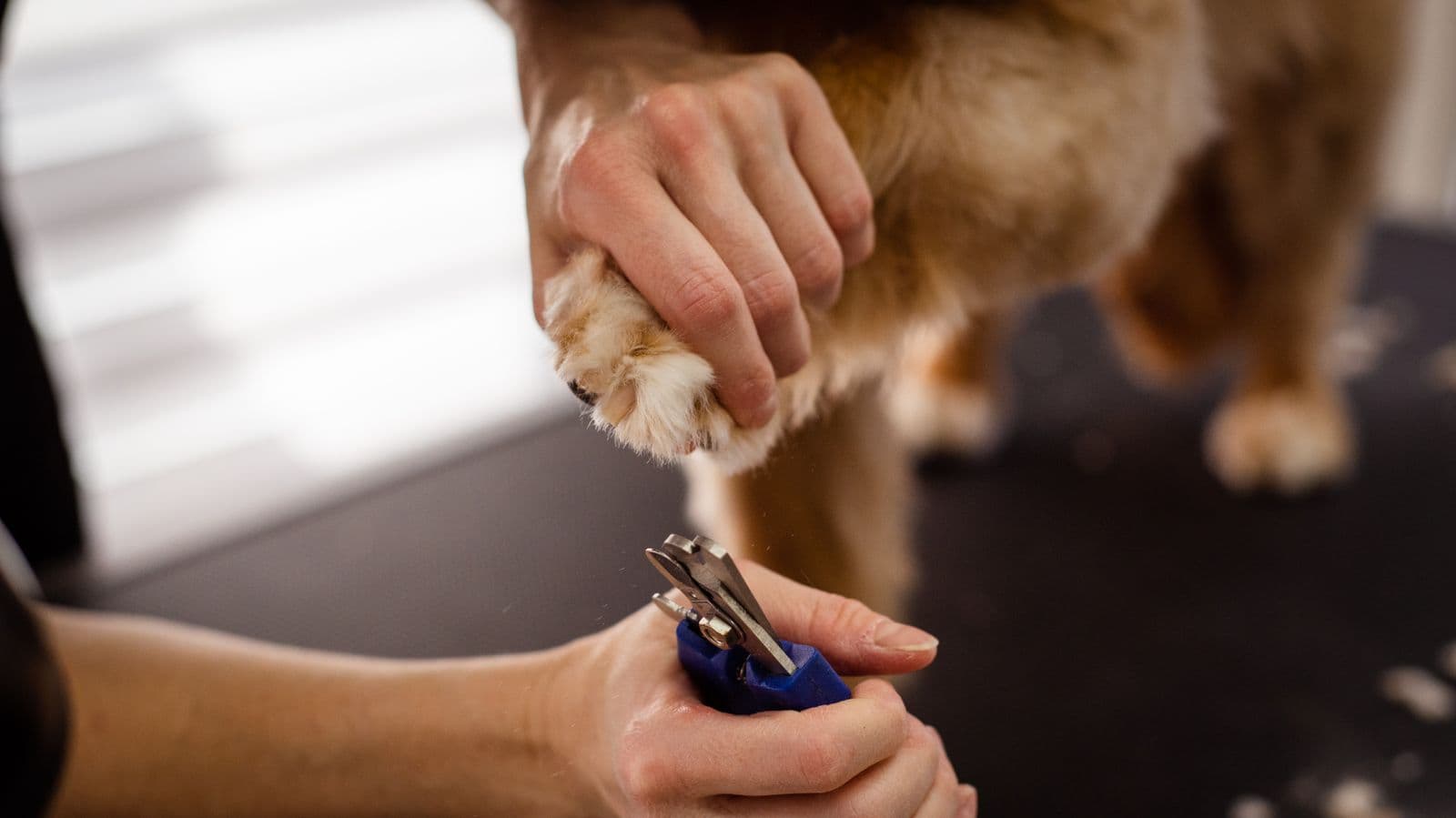
What the tool decides is how small a cut you can take and how much the dog has to tolerate while you take it. VCA's guidance is to cut roughly 2 to 3 mm short of the quick on a pale nail, and on a dark nail to take only the very tip in increments of 1 to 2 mm. A blunt clipper cannot do that. It compresses the nail, the nail springs back, and you either crush it or take more than you meant to. A grinder removes material continuously instead of in one committed bite, which is precisely why it suits the dogs whose quicks have crept out to the end.
So the choice comes down to four facts about your specific dog, and none of them are on the packaging.
What actually decides the tool
Nail thickness. A 70 lb labrador's nail needs jaws that close with real force. Put the same nail in a small guillotine and the blade meets more resistance than it was built for, which dulls it fast and turns a clean cut into a crush. Toy breeds have the opposite problem, where a big plier clipper hides the nail behind its own jaws and you cannot see what you are about to take.
How far out the quick sits. If the nails have been long for months, the quick is long too, and getting them back is weeks of taking a fraction at a time until it recedes. The recession schedule and how to read a black nail is the part that matters most, and it is far easier to execute with a grinder, because a grinder lets you stop at the moment the cut surface changes.
What the dog objects to. Some dogs hate the pressure and the crunch of a clipper. Others will sit through clippers all day and leave the room at the sound of a motor. That is a real split, and it is why a household with two dogs often needs two tools rather than one correct one.
Feathering. Spaniels, setters, collies and anything with long hair between the toes have a specific grinder hazard. A rotating bit catches hair and winds it in. Hold the hair back with your fingers or a thin sock over the foot with the nails poked through, or use clippers on that dog. The same brush-out that keeps feathering from matting behind the pads makes the grinder usable at all.
The three mechanisms, and who each one is wrong for
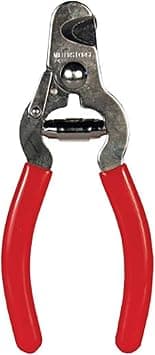
Plier clippers are two curved blades that meet, spring-loaded, with the cutting action of secateurs. They are the most forgiving of technique, the easiest to angle, and the best choice for thick nails. They are wrong for a dog that flinches at the pressure of the jaws closing, and wrong for anyone trying to take slivers off an overgrown nail, because the smallest cut a plier can make is still bigger than the smallest cut a grinder can make.
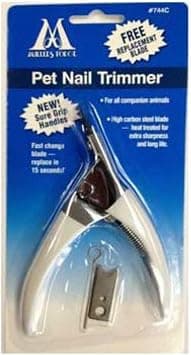
Guillotine trimmers feed the nail through a hole and a blade slides across it. The hole is a length gauge, which is genuinely useful when you are learning, and the cut is very clean on a small or medium nail. They are wrong for large thick nails, wrong when the blade is old, and wrong if you feed the nail through backwards, which pushes the blade toward the quick instead of away from it. The blade is consumable and most owners never replace it.
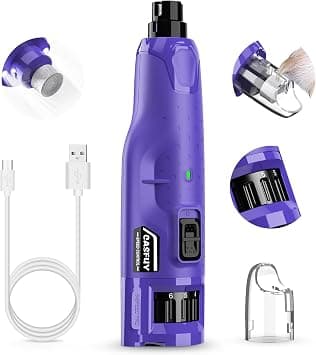
Rotary grinders sand the nail down with an abrasive band. They leave a rounded edge that will not snag carpet, they are the most controllable tool for a long quick, and VCA notes they carry less risk of cutting into it. Their failure modes are heat and hair. Grinding one nail continuously builds friction heat that the dog feels well before you do, so work in passes of a couple of seconds with a break between. They are wrong for a dog that has not been conditioned to the noise, and slow on giant-breed nails.
The picks
$8.25
Price checked Sep 12, 2026
Millers Forge Stainless Steel Dog Nail Clipper, Plier Style 743C
This is the one to buy if you are buying one thing. Stainless plier clippers with a spring return and enough bite for a labrador's nail, at a price that makes the professional alternatives hard to justify. Groomers own these in quantity for a reason, and the reason is that the blades stay sharp through years of use and the geometry lets you see the nail while you cut it.
We may earn a commission on this link. It never changes the ranking.
- Type
- Plier style
- Blades
- Stainless steel
- Action
- Spring-loaded
- Best size range
- Medium and large dogs
What works
- Cuts thick nails without two hands on the handles
- Blades hold an edge far longer than budget clippers
- Open geometry leaves the nail visible right up to the cut
- Cheap enough to keep a second pair where the dog is calmest
What to know
- Jaws crowd the nail on toy breeds
- No safety stop, so length judgement is entirely yours
- The closing crunch is exactly what noise-sensitive dogs object to
$15.52
Price checked Sep 12, 2026
Millers Forge Pet Nail Trimmer
The guillotine worth owning, mainly because it ships with a spare blade and takes replacements, which is the failure point that ruins every other guillotine in the aisle. The heat-treated carbon steel blade cuts small nails more cleanly than a plier does, and the opening doubles as a depth stop while you are still learning where the quick sits.
We may earn a commission on this link. It never changes the ranking.
- Type
- Guillotine
- Blade
- Heat-treated carbon steel
- Included
- One replacement blade
- Best size range
- Small and medium dogs
What works
- Very clean cut on nails it is sized for
- The hole gives a repeatable length reference
- Replaceable blade, so it does not become disposable
- Quieter in action than a plier clipper
What to know
- Struggles and eventually crushes on thick large-breed nails
- Fed through the wrong way it cuts toward the quick
- Carbon steel needs drying after wet feet
- The nail is hidden inside the head at the moment of the cut
$25.49
Price checked Sep 12, 2026
Casfuy Dog Nail Grinder Quiet, 45 dB 6-Speed
The grinder to start with. Six speeds matter more than the marketing implies, because the low setting is slow enough to keep the nail cool on a nervous dog and the high setting still gets through a retriever's nail. The rated 45 dB and the low vibration are the whole point, since the reason grinders fail is the dog leaving, not the abrasive. Three port sizes let you expose only as much of the band as the nail needs.
We may earn a commission on this link. It never changes the ranking.
- Type
- Rotary grinder
- Speeds
- Six
- Rated noise
- 45 dB
- Ports
- Three opening sizes
- Power
- Rechargeable, USB
What works
- Quiet and low-vibration enough that conditioning actually works
- Six speeds cover a chihuahua and a rottweiler from one tool
- LED lighting helps you read the cut surface on dark nails
- Dust cap keeps nail powder out of the room
What to know
- Slow on giant-breed nails compared with a clipper
- Catches feathering if the hair is not held back
- Bands are consumable and clog
- Needs charging before the session, not during it
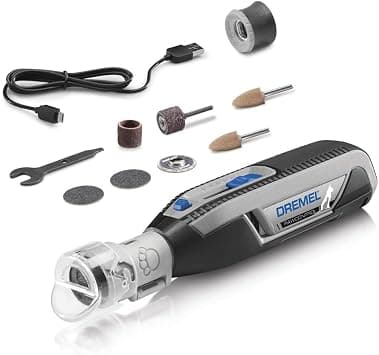
$63.99
Price checked Sep 12, 2026
Dremel PawControl 7760-PET Dog Nail Grinder and Trimmer
Worth the premium only if you are grinding a lot of nails. This is a real rotary tool from a rotary tool company, with the torque to hold speed under load instead of bogging down on a thick nail, and the paw guide is the part that changes results: it sets the angle and caps how much of the band the nail can reach. For one small dog it is more machine than the job needs.
We may earn a commission on this link. It never changes the ranking.
- Type
- Rotary grinder kit
- Battery
- 4V lithium-ion, rechargeable
- Speed
- Variable
- Included
- Nail guard and 45 degree paw guide, sanding accessories
What works
- Holds speed under load where budget grinders stall
- Paw guide fixes the angle and limits over-grinding
- Battery and build survive weekly use across several dogs
- Accessories and bands are easy to find
What to know
- Several times the price of a grinder that suits one dog
- Louder and more tool-like than the quiet-first grinders
- Kit contents are more than most owners will use
- Still needs the same conditioning work as any motor near a foot
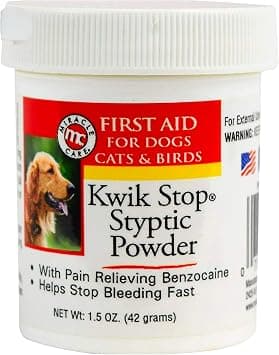
$18.38
Price checked Sep 12, 2026
Kwik Stop Styptic Powder for Dogs, Cats and Birds, 1.5 oz
Buy this with the clippers, not after the first accident. Styptic powder is the standard answer to a nicked quick and it is what VCA names first, with flour or cornstarch as the kitchen fallback if you have nothing else. The label lists benzocaine alongside the clotting agent. A jar lasts years, and having it within reach is the difference between a thirty second interruption and the session that teaches your dog to fear the clippers.
We may earn a commission on this link. It never changes the ranking.
- Type
- Styptic powder
- Size
- 1.5 oz
- Listed ingredients
- Includes benzocaine
- Use
- Nail and claw trimming, minor superficial cuts
What works
- Stops a nicked quick quickly with moderate pressure
- One jar outlasts several clippers
- Works for cats and birds in the same household
- Cheap insurance against the trim that ruins the next year of trims
What to know
- Not for deep wounds, which are a vet matter
- Stings on application, which some dogs react to
- Powder cakes if the lid is left off
- Larger sizes cost less per ounce if you trim several animals
| Tool | Mechanism | Best for | Main limit | Price |
|---|---|---|---|---|
| Millers Forge 743C | Plier | Medium and large nails | Crowds toy-breed nails | $8.25 |
| Millers Forge Pet Nail Trimmer | Guillotine | Small and medium nails | Crushes thick nails | $15.52 |
| Casfuy 45 dB 6-Speed | Rotary grinder | Long quicks, nervous dogs | Slow on giant breeds | $25.49 |
| Dremel PawControl 7760-PET | Rotary grinder kit | Several dogs, thick nails | Price and bulk | $63.99 |
| Kwik Stop Styptic Powder | Styptic powder | A nicked quick | Superficial bleeding only | $18.38 |
Making the tool work
Buy the conditioning before you buy the clippers. Cornell's Riney Canine Health Center frames grooming as cooperative care, and the specific advice is to practise gentle handling of paws and nails while the dog is already relaxed, and to pair the tool with food before it ever touches a nail. For a grinder that means running it across the room, then in the same room, then near the foot, then against one nail for two seconds, over days. Skipping that is why grinders end up in drawers.
Keep the frequency high and the sessions short. Roughly monthly is the usual interval for a dog whose nails are already at the right length, sooner for a dog that walks mostly on grass and carpet, later for one doing daily miles on pavement. If you are receding a long quick, you are working in far smaller increments far more often, and that only survives if each session is two minutes rather than a fight.
Do one foot and stop. A dog that learns the trim always ends before it gets unpleasant is a dog you can still trim in five years. The same logic that governs short brushing sessions on an animal that objects applies exactly here, and it is worth more than any feature on any of these tools.
Finally, watch what the nails are doing to the rest of the dog. Nails long enough to touch the floor when the dog is standing push the toe back and shift load onto the joints on every step, which is a bigger deal in a stiff older dog than in a young one. If that is your dog, the trim belongs alongside the rest of the plan for an ageing dog's joints. And if there is a cat in the house, do not reach for these: a cat's claw is a different structure and a different job.
Questions people actually ask
Clippers or a grinder?
Clippers if the nails are already near the right length and the dog tolerates pressure. A grinder if the quick is long and you need to remove very small amounts repeatedly, or if the dog objects to the crunch of a clipper more than to a motor. Plenty of households end up using clippers for the bulk and a grinder to round the edge.
How often should a dog's nails be trimmed?
About monthly as a default, adjusted by surface. Dogs walking regularly on pavement wear nails down and can go longer, dogs on grass and carpet need it sooner. The practical test is sound: if you can hear clicking on a hard floor while the dog walks normally, the nails are long.
How do I find the quick on a black nail?
You do not find it from the outside, you find it from the cut surface. Take very small slices and watch the end of the nail. Chalky white gives way to a grey or pink centre that appears as a small dot, and that dot is the signal to stop on that nail.
What do I do if I cut the quick?
Apply styptic powder with moderate pressure for several seconds, or flour or cornstarch if that is all you have. Then stop for the day, whatever is left untrimmed. Continuing after a nick is what turns one bad moment into a dog that will not offer a foot.
Are grinders safe on dogs with long hair on their feet?
Only with the hair physically held back, because a rotating bit winds hair in. Hold the hair clear with your fingers or push the nails through an old sock. If that sounds like more hands than you have, use clippers on that dog.
Is a nail grinder better for a dog with arthritis?
It avoids the squeeze and twist of a clipper on a toe that may already be sore, and it lets you work without holding the foot in one fixed position. Whether a stiff older dog is comfortable enough for any trim at home is a question for your vet, who can also say whether pain management should come first.
Sources
As an Amazon Associate we earn from qualifying purchases. We earn a commission on some links, at no extra cost to you. It never changes which products we recommend or the order they appear in. Full disclosure

Who wrote this
Marin Okafor
Editor, dog gear and nutrition labels
Marin Okafor edits PetGearSearch and writes the dog side of it: food, beds, crates, carriers, grooming tools, and the pet insurance policies that pay for the rest. The ingredient panel and the AAFCO statement get read before a single review does, because that back-of-bag paragraph is where two apparently identical foods stop being identical.
The standard
How this guide was built
- The full product specification, ingredient panel or material spec, read end to end rather than summarised from a retail listing.
- The veterinary and regulatory guidance that applies to the category, cited by name and linked — AAFCO nutrient profiles, WSAVA manufacturer guidelines, the VOHC accepted-product list.
- Aggregated owner reviews at volume across retailers, read for the pattern rather than the anecdote, with deliberate attention to the one-star reports where the failure modes live.
- Every price checked against the live listing on the date printed beside it.