Cooling Mats and Elevated Beds: What Actually Helps Prevent Heatstroke
A gel pad is comfort, not a treatment. Here is what cooling bedding does, what it does not, and the numbers that actually define a heatstroke emergency.
By Marin Okafor, editor, dog gear and nutrition labels
Published Aug 26, 2026 · 10 min read
- Beds & Furniture
In this guide
A cooling mat sits in the pet aisle next to the orthopaedic beds, priced like a comfort product, and marketed with a photo of a dog stretched out looking relieved. What it is not sold with is a clear statement of what it does, and the gap matters more here than in most categories, because the failure mode it is adjacent to is a dog dying in a back yard.
Heatstroke is not a vague discomfort. Cornell's Riney Canine Health Center defines it against a specific number: a dog's normal body temperature runs 100.5 to 102.5 degrees Fahrenheit, and heatstroke is 105 degrees or higher. At that point the condition is systemic. Cornell lists bloody diarrhoea, vomiting, weakness, confusion and seizures alongside the heavy panting most owners already recognise, and the complications include acute kidney injury and clotting disorders. A cooling mat has no role in treating any of that. Its role, if it has one, is upstream: making the everyday hours a dog spends lying around less likely to add heat load in the first place.
Who is actually at risk
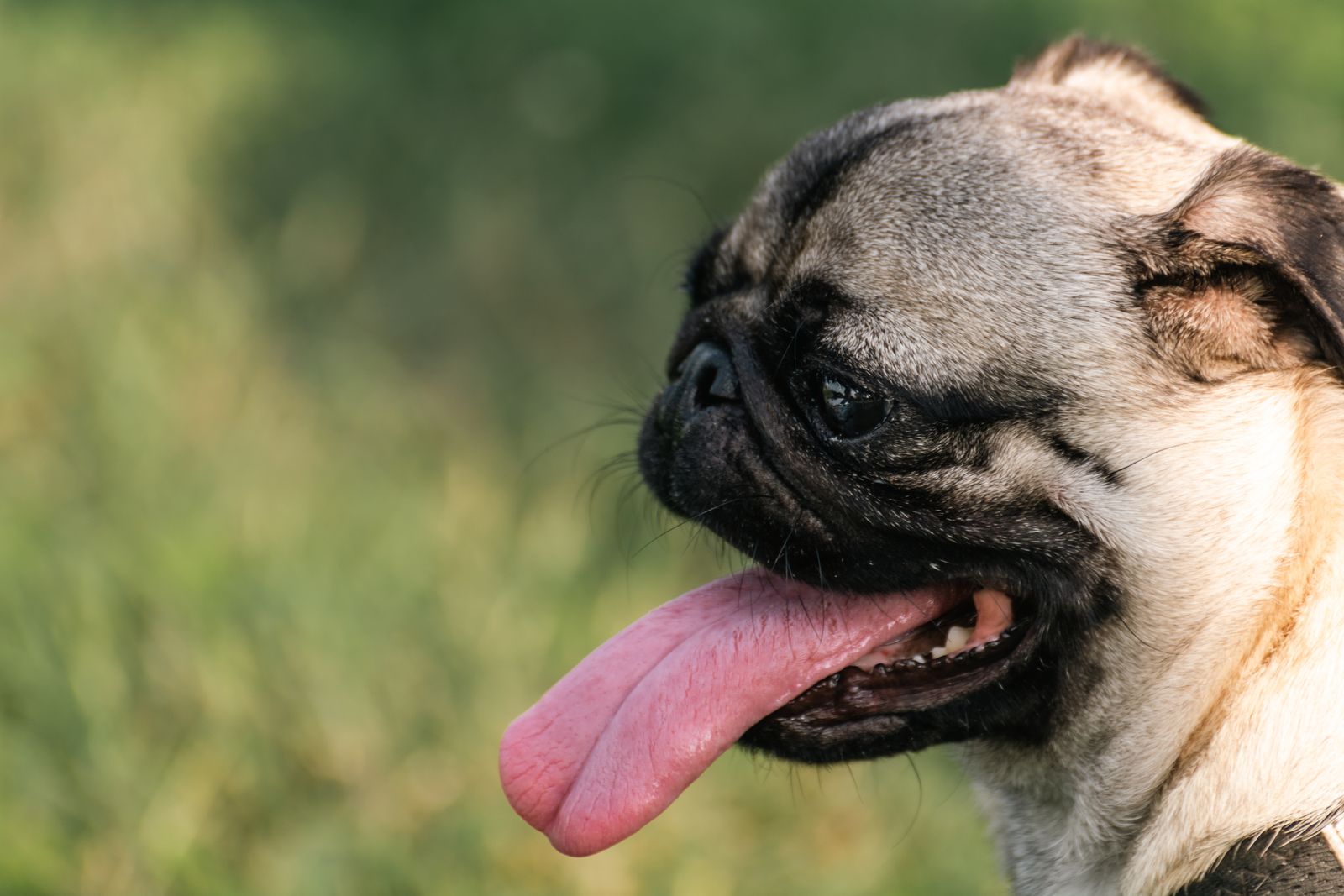
Cornell names the risk factors specifically, and they compound. Brachycephalic breeds, including pugs, bulldogs and the other flat-faced breeds, carry the highest baseline risk, because a dog cools almost entirely by panting rather than sweating, and a shortened airway makes panting a less effective radiator. Elderly dogs, overweight dogs, thick-coated or dark-coated dogs, and dogs with an existing respiratory or cardiac condition such as laryngeal paralysis or heart disease are all named as elevated-risk groups on top of that.
This is the population a cooling bed is actually for. A young, lean, short-coated dog with a normal muzzle length has a wide safety margin in ordinary conditions and gets a comfort upgrade from a cooling pad, not a safety one. A ten-year-old overweight pug gets something closer to a genuine risk reduction from anything that keeps its resting body temperature a degree or two lower through a hot afternoon, on top of everything else in this article.
What the products actually do
Pressure-activated gel pads. A layer of non-toxic gel that liquefies slightly under the dog's body weight and draws heat away by direct contact, then re-solidifies once the dog moves off it. No water, no electricity, no refrigeration required, which is the main selling point. The cooling effect is real but local and finite: it works by conduction against the patch of gel actually in contact with the dog, and a large dog covering the whole pad depletes the effect faster than a small dog on the same pad. These are also punctureable. A pad chewed open stops working and makes a mess, and it is not advertised as edible or safe to ingest, so a determined chewer should not have one unsupervised.
Elevated mesh cots. A taut fabric or mesh bed raised on a frame, cooling by airflow underneath the dog rather than by any active mechanism. No gel, nothing to puncture, and the effect scales with ambient air movement rather than depleting with contact time, which makes it the more reliable choice outdoors or in a humid climate where a gel pad's evaporative assist does less. The tradeoff is a harder sleeping surface with no cushioning, which matters for an older dog with joint pain.
Evaporative pads and vests. Fabric that is soaked in water and cools as the water evaporates, the same mechanism as a wet towel. Genuinely effective while damp, and genuinely ineffective once dry, which means they need re-wetting through the day to do anything. Best suited to active outdoor use, a hike or a yard on a hot day, rather than as a permanent indoor bed.
Fans and misting systems. Not a bed product, but worth naming because they solve a different part of the problem: air movement across a wet or bare-skinned dog accelerates evaporative cooling, which is exactly the mechanism a dog's own panting relies on. A fan pointed at a resting dog does more for a brachycephalic breed than most cooling pads alone.
| Type | Mechanism | Best for | Limitation |
|---|---|---|---|
| Pressure-activated gel pad | Conductive heat transfer on contact | Indoor resting spot, no power needed | Local effect only, punctureable |
| Elevated mesh cot | Airflow underneath the dog | Outdoor use, humid climates, chewers | No cushioning for joint pain |
| Evaporative pad or vest | Evaporation of absorbed water | Active use, hiking, yard time | Needs re-wetting, ineffective dry |
| Fan or misting system | Accelerated evaporative cooling | Brachycephalic breeds, severe heat | Not a bed, needs power or water |
What actually prevents heatstroke
The bedding is the smallest lever in this list, and it is worth saying plainly rather than letting the product category imply otherwise.
Time the exercise. Cornell's guidance is to walk in the early morning or evening and to avoid the hottest part of the day, specifically the late-afternoon window around 3 to 5pm, and to skip strenuous exercise in high humidity or before a dog has acclimated to summer conditions.
Test the pavement with your own hand. The standard Cornell gives is concrete: if you cannot hold your bare hand or stand barefoot on the pavement for about 10 seconds, it is too hot for a dog's paws, and blacktop routinely runs hotter than the air temperature above it.
Never leave a dog in a parked car, for any amount of time. The AVMA's warm-weather guidance and Cornell's own figures agree on this one closely: at just 70 degrees Fahrenheit outside, a car's interior can climb roughly 40 degrees within an hour, with most of that increase happening in the first 15 to 30 minutes. Cracking a window does not meaningfully change this, and it holds regardless of what restraint the dog is travelling in.
Water, constantly available, and brought along. Frequent water breaks on a walk, a collapsible bowl in the bag, and access to a paddling pool or sprinkler at home all measurably reduce the load a dog is carrying into a hot afternoon.
Know the signs and act on them immediately. Heavy panting that does not settle, thick drooling, wobbliness, vomiting, dark or bright red gums, or collapse are not wait-and-see signs. Cornell's own first-aid guidance is to begin cooling immediately, wetting the dog with cool water and running the car's air conditioning directly on the dog, while already travelling to a veterinary hospital, because heatstroke is intensive-care territory and not something to manage at home.
A cooling mat sits underneath all of that, not instead of it. It is a reasonable purchase for a brachycephalic, senior, overweight or thick-coated dog as one part of a heat-management routine that also includes the items above, and it is not a purchase that changes the routine's importance.
Buying one, if you are buying one
Size to the dog lying fully stretched, the same rule that applies to any bed: a dog curled up to fit a too-small pad is not getting the cooling contact area the product is sold on, and the same logic governs crate and bed sizing generally.
For a chewer, choose the elevated mesh cot over the gel pad. A punctured gel pad is a mess and a failed product, not a hazard on the label, but "not marketed as safe to ingest" is doing a lot of work in that sentence and a dog that reliably destroys soft furniture should not be tested against a full pad of gel.
For a senior dog with joint pain, prioritise the orthopaedic bed over the cooling bed and add a fan or air conditioning to the room instead. A hard mesh cot solves heat and creates a pressure-point problem for a dog that already needs cushioning, and the two priorities do not have to trade off against each other if the room itself is cooled.
Wash covers on the manufacturer's stated cycle. Gel pads and evaporative pads both sit against skin for long stretches in warm weather, which is exactly the condition that grows bacteria and yeast fastest, and a cover that cannot go through a normal wash cycle is a worse buy than one that can regardless of what else it does.
A cooling bed is one item in a household's bed rotation rather than a replacement for it, and the beds worth buying for the rest of the year are chosen on support and washability rather than on a summer feature most of them do not have.
The short version
A cooling mat or elevated cot is a real product with a real, limited mechanism, worth buying for a brachycephalic, senior, overweight or thick-coated dog as one layer of a summer routine. It is not a substitute for timing exercise around the heat, testing pavement with your own hand, never leaving a dog in a car, and treating the specific signs Cornell lists — heavy panting that will not resolve, drooling, weakness, vomiting, collapse — as the emergency they are. Elevated joint support and correct crate sizing both matter for the same dog in different seasons, and heat management is the one with a clock attached.
Questions people actually ask
Do cooling mats actually work?
Yes, within a limited scope. Gel pads cool by conduction where the dog's body contacts the gel, and elevated mesh cots cool by airflow underneath the dog. Both measurably lower the heat a resting dog is exposed to, but neither treats heatstroke once it starts, and neither replaces shade, water and avoiding peak-heat exercise.
What temperature is heatstroke in dogs?
Cornell's Riney Canine Health Center defines a dog's normal body temperature as 100.5 to 102.5 degrees Fahrenheit and heatstroke as 105 degrees or higher. At that point it is a systemic medical emergency requiring immediate veterinary care, not something to manage with cooling products at home.
Which dogs are most at risk of heatstroke?
Brachycephalic breeds such as pugs and bulldogs carry the highest risk because they cool almost entirely by panting and have a shortened airway that makes panting less effective. Elderly dogs, overweight dogs, thick-coated or dark-coated dogs, and dogs with existing heart or respiratory disease are also named as elevated-risk groups.
How hot does a car get in the sun?
Fast, and at moderate outside temperatures. Cornell and the AVMA both note that at around 70 degrees Fahrenheit outside, a parked car's interior can rise roughly 40 degrees within an hour, with most of that increase in the first 15 to 30 minutes. A dog should never be left unattended in a parked car regardless of the temperature or expected duration.
Is the pavement too hot for my dog's paws?
Test it yourself: if you cannot hold your bare hand, or stand barefoot, on the pavement for about 10 seconds, it is too hot for a dog to walk on. Blacktop and asphalt commonly run hotter than the surrounding air temperature.
Sources
As an Amazon Associate we earn from qualifying purchases. We earn a commission on some links, at no extra cost to you. It never changes which products we recommend or the order they appear in. Full disclosure

Who wrote this
Marin Okafor
Editor, dog gear and nutrition labels
Marin Okafor edits PetGearSearch and writes the dog side of it: food, beds, crates, carriers, grooming tools, and the pet insurance policies that pay for the rest. The ingredient panel and the AAFCO statement get read before a single review does, because that back-of-bag paragraph is where two apparently identical foods stop being identical.
The standard
How this guide was built
- The full product specification, ingredient panel or material spec, read end to end rather than summarised from a retail listing.
- The veterinary and regulatory guidance that applies to the category, cited by name and linked — AAFCO nutrient profiles, WSAVA manufacturer guidelines, the VOHC accepted-product list.
- Aggregated owner reviews at volume across retailers, read for the pattern rather than the anecdote, with deliberate attention to the one-star reports where the failure modes live.
- Every price checked against the live listing on the date printed beside it.