Best Automatic Litter Boxes
Five self-cleaning boxes judged on what decides the purchase: whether cats accept them, what the consumables cost, and what happens when the motor stops.
By Tess Lindqvist, writer, cat products and everyday health
Published Aug 6, 2026 · reviewed Sep 5, 2026 · 11 min read
- Litter & Boxes
- 5 products compared
In this guide
An automatic litter box is the most expensive product a cat owner buys that the cat has a veto over. That is the whole risk profile of the category. A four hundred dollar box that your cat refuses to enter is a four hundred dollar box, and no feature list changes that.
So the five below are judged on acceptance first, then on what they cost to keep running, then on what happens when something breaks. Cleaning mechanism, app features and waste drawer capacity all matter less than whether the animal will get in.
They also solve a real problem when they work. Odour in a well-managed litter box is a scooping frequency problem, and a machine that removes waste within minutes of use means the ammonia never has time to form. The weight-logging models add something no manual box can: a per-cat record of how often each animal uses the box and what it weighs, which in cats is a genuine early-warning signal for urinary disease, kidney disease and diabetes.
What actually decides this purchase
Acceptance, and the transition period. Most of these are enclosed globes or hooded units with a motor that moves while the cat is nearby. Confident cats adapt in days. Nervous cats can take weeks, and some never accept one. The non-negotiable rule is that the old box stays in place, unplugged machine first, for as long as it takes. Removing the old box to force the issue is the single commonest way this purchase fails.
Consumables. Read the running cost before the sticker price. Units taking ordinary clumping clay cost you nothing beyond litter you were buying anyway. Units built around proprietary crystal trays or branded waste bags carry an ongoing subscription that can exceed the purchase price over a few years.
Cat size and weight sensing. Most of these use a weight sensor to detect entry and start a delay timer. Kittens and very small cats can fall under the detection threshold, which means the cycle may run while the cat is inside. Manufacturers publish minimum weights, and they are worth checking against the actual cat rather than the breed average.
Multi-cat capacity. Waste drawer volume and cycle time are the constraint. A unit rated for one cat in a three-cat house needs emptying every couple of days and will be found full at the worst moment.
Failure mode. These are motors, sensors and gearboxes in a corrosive environment, and they eventually need service. Check warranty length, whether spare parts are sold separately, and whether the unit is usable as a plain box when it is off.
The picks
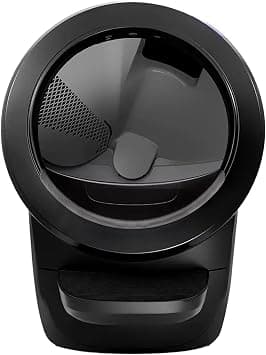
$699
Price checked Sep 5, 2026
Litter-Robot 4
The one to buy if the budget allows. It uses ordinary clumping clay rather than proprietary refills, which keeps the running cost at zero above what you already spend. It sifts within minutes of use into a sealed drawer, so odour is controlled structurally rather than chemically. The reason to choose it over cheaper units is the weight and visit logging: a per-cat record of frequency and body weight is the closest thing a home has to an early-warning system for urinary and kidney disease, and in cats that is worth a great deal.
We may earn a commission on this link. It never changes the ranking.
- Mechanism
- Rotating globe, sifts into sealed drawer
- Litter
- Standard clumping clay
- Monitoring
- Per-cat weight and visit logging via app
- Capacity
- Suits multi-cat households
What works
- Uses ordinary clumping litter, so no consumable lock-in
- Waste separated within minutes, which is what actually controls odour
- Per-cat weight and visit tracking catches health changes early
- Large enough for most multi-cat households
What to know
- Costs many times what a year of litter costs
- Some cats need weeks of patient introduction and a few never accept it
- Mechanical parts eventually need service, and the drawer still needs emptying
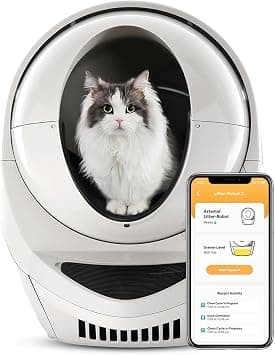
$549
Price checked Sep 5, 2026
Litter-Robot 3 Connect
The previous generation, still sold, and the value play within the Litter-Robot line. The core sift-and-seal mechanism is the same one that made the brand, and it takes the same ordinary clumping clay. What you give up is the newer unit's refinements: it is noisier, the entry is higher, the sensing is less sophisticated, and it does not do per-cat weight tracking. If the health monitoring is not why you are buying, the saving is real.
We may earn a commission on this link. It never changes the ranking.
- Mechanism
- Rotating globe, sifts into sealed drawer
- Litter
- Standard clumping clay
- Connectivity
- App notifications and cycle control
- Entry
- Higher step-in than the 4
What works
- Same proven sifting mechanism at a lower price
- Standard clumping litter, no proprietary consumables
- Well-established parts and service availability after years on sale
- App control and drawer-full notifications
What to know
- Noticeably louder in operation than the 4
- High entry step is wrong for kittens and arthritic cats
- No per-cat weight tracking, which is the 4's best feature
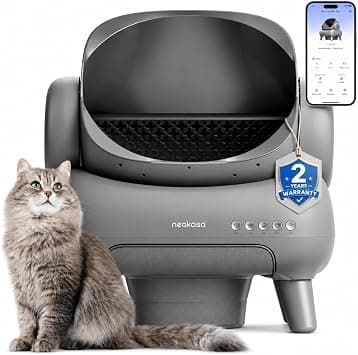
from $379.98
Price checked Sep 5, 2026
Neakasa M1 Plus
The pick for the cat that will not enter a globe. The M1 is open-topped, so the animal steps into what looks and feels like an ordinary tray and the sifting happens underneath. That single design decision removes the biggest cause of failure in this category, and it makes the unit far easier to introduce to a nervous or elderly cat. Takes standard clumping litter.
We may earn a commission on this link. It never changes the ranking.
- Mechanism
- Open-top tray, sifts beneath
- Litter
- Standard clumping
- Design
- No enclosure, no entry tunnel
- Options
- Anti-tracking step and litter fence sold as bundles
What works
- Open top removes the enclosure problem that defeats many cats
- Much easier transition for nervous, elderly or large cats
- Standard clumping litter, no consumable lock-in
- Lower and easier to step into than any globe design
What to know
- Open design contains less odour between cycles than a sealed drawer
- More litter scatter than an enclosed unit, so budget for the step or a mat
- Newer brand with a shorter service track record than Whisker
$340.00
Price checked Sep 5, 2026
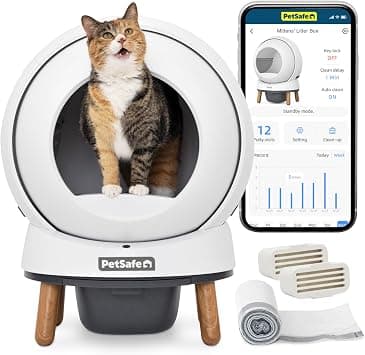
PetSafe ScoopFree SmartSpin
Sifts clumps into a sealed, deodorised drawer and reports through the My PetSafe app, at roughly half the price of the flagship Litter-Robot. PetSafe has been in this category a long time and the service position reflects that. The reason it is not higher on the list is capacity: the advertised hands-free interval is around two weeks, which is a single-cat figure, and a multi-cat house will be emptying it considerably more often.
We may earn a commission on this link. It never changes the ranking.
- Mechanism
- Rotating sift into sealed waste drawer
- Litter
- Clumping
- Monitoring
- My PetSafe app
- Interval
- Around two weeks hands-free, single cat
What works
- Well-established brand with real parts and service history
- Sealed deodorised drawer controls odour between emptyings
- App monitoring at a mid-range price
- Uses clumping litter rather than proprietary trays
What to know
- Two-week hands-free claim assumes one cat
- Enclosed design still needs a patient introduction
- Fewer health-monitoring features than the Litter-Robot 4
$279.99
Price checked Sep 5, 2026
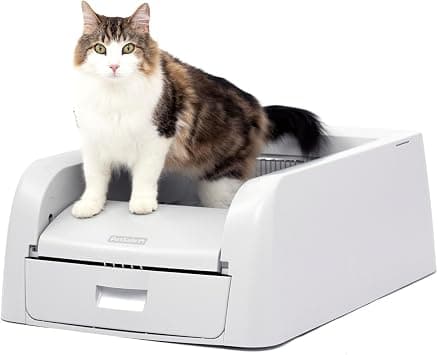
PetSafe ScoopFree Clumping
The entry point, and the sensible first purchase if you are unsure. It rakes clumping litter into a covered trap on a timer, with no app and no monitoring, for well under half the flagship price. Buy this one to answer the acceptance question cheaply. If the cat takes to it and you later want weight logging, you have lost far less than you would by discovering the same thing at seven hundred dollars.
We may earn a commission on this link. It never changes the ranking.
- Mechanism
- Rake, into a covered waste trap
- Litter
- Standard clumping litter
- Connectivity
- None
- Price position
- Lowest here by a clear margin
What works
- Cheapest way to find out whether your cat accepts an automatic box
- Uses ordinary clumping litter rather than crystal trays
- Simple mechanism with fewer things to fail
- Established brand with parts availability
What to know
- No app, no notifications, no health monitoring
- Rake mechanisms handle weak clumps less well than a sifting globe
- Smaller waste capacity, so more frequent emptying
How they compare
| Box | Design | Litter | Health monitoring | Price |
|---|---|---|---|---|
| Litter-Robot 4 | Enclosed globe | Standard clumping | Per-cat weight and visits | $699 |
| Litter-Robot 3 Connect | Enclosed globe | Standard clumping | Cycle notifications only | $549 |
| Neakasa M1 Plus | Open top | Standard clumping | App notifications | from $379.98 |
| PetSafe SmartSpin | Enclosed, sealed drawer | Clumping | App notifications | $340.00 |
| PetSafe ScoopFree Clumping | Rake into covered trap | Standard clumping | None | $279.99 |
Who each one is wrong for
Every enclosed unit here is wrong for a cat that has never used a covered box and does not want to start. Open-top is the safer bet if you already know your cat avoids enclosures, and it is worth knowing which camp your cat is in before spending anything, which is a one-week test with two ordinary boxes.
All of them are wrong for a kitten under about four months. Weight sensing has a floor, kittens fall below it, and a kitten is also still learning to use a box at all. Start on a large open tray.
All of them are wrong for a household with an active soiling problem that has not been diagnosed. Buying a machine at that point adds a variable to a situation that needs variables removed. Work the order of operations first, starting with a vet visit.
And all of them are wrong as a substitute for having enough boxes. One automatic unit in a three-cat house is one location, and the n plus one rule does not stop applying because the box has a motor. Box count and placement outrank every feature on this page.
Introducing one without wasting the money
Put the new unit next to the existing box, switched off, with litter in it, and leave it there for several days so the cat can investigate on its own terms. Then turn it on and let it cycle when the cat is elsewhere in the house, so the noise arrives before the association does. Keep the old box in place throughout, cleaned as normal.
Only remove the old box once the new one has been used consistently for a couple of weeks, and even then consider keeping it, because the n plus one rule still applies. Use the same litter the cat already accepts. If the cat stops using either box at any point, go back a step rather than pressing on.
Expect a few days for a confident cat and a few weeks for a cautious one. If after a month the cat has not used it, the honest conclusion is that this cat does not want an automatic box, and the money is better spent on a very good ordinary litter and a large tray.
Questions people actually ask
Do automatic litter boxes actually reduce odour?
Yes, and structurally rather than chemically. Ammonia forms from urine sitting in the box, so removing waste within minutes prevents it rather than masking it. That is the same reason twice-daily scooping works in a manual box.
Are they safe for cats?
The mainstream units use weight sensors and delay timers to avoid cycling while a cat is present, and reputable brands publish minimum weight thresholds. Very small cats and kittens can fall below detection, which is the main safety consideration and the reason not to use one with a kitten.
How many cats can one automatic box serve?
Fewer than the marketing suggests, and the constraint is waste drawer volume rather than mechanism. Treat any hands-free interval claim as a single-cat figure and divide. The n plus one rule still applies regardless.
Can I use my usual litter?
In every unit on this list, yes, and that was a selection criterion. Units built around proprietary crystal trays or branded bags carry a running cost that can exceed the purchase price over a few years, which is worth checking before you buy.
What happens when it breaks?
Check warranty length and whether spare parts are sold separately before you buy. Most of these can be used as an ordinary box while switched off, which matters more than it sounds when a part is on order.
Sources
As an Amazon Associate we earn from qualifying purchases. We earn a commission on some links, at no extra cost to you. It never changes which products we recommend or the order they appear in. Full disclosure

Who wrote this
Tess Lindqvist
Writer, cat products and everyday health
Tess Lindqvist writes the cat side of PetGearSearch, plus the health-adjacent categories where a label makes a claim the evidence has to back. The question asked of every product is the one owners actually ask at 3am: will the animal use it, and does it do the thing the box says.
The standard
How this guide was built
- The full product specification, ingredient panel or material spec, read end to end rather than summarised from a retail listing.
- The veterinary and regulatory guidance that applies to the category, cited by name and linked — AAFCO nutrient profiles, WSAVA manufacturer guidelines, the VOHC accepted-product list.
- Aggregated owner reviews at volume across retailers, read for the pattern rather than the anecdote, with deliberate attention to the one-star reports where the failure modes live.
- Every price checked against the live listing on the date printed beside it.